Patellofemoral pain in children

Patellofemoral pain (PFP) is a common concern in children and adolescents, particularly those who are sporty or growing rapidly. While many adults experience similar symptoms, PFP in children can be overlooked or misattributed to “growing pains,” leading to delays in effective treatment. In this article we explain what patellofemoral pain is, what causes it, how it’s diagnosed and importantly, how specialist physiotherapy can help your child recover and stay active.
What is patellofemoral pain?
Patellofemoral pain is characterised by pain around the front of the knee and the patella (kneecap), especially during activities that load the knee joint. These activities include running, squatting, stair climbing or prolonged sitting with bent knees.
What causes patellofemoral pain in children?
PFP is usually multifactorial, meaning several contributing factors come together to produce symptoms:
- Biomechanical factors: Poor tracking of the kneecap due to muscle imbalances, particularly weak hip and quadriceps muscles.
- Growth-related changes: Rapid growth during adolescence can affect alignment and muscle flexibility, increasing stress on the knee joint.
- Training load and activity patterns: Sudden increases in training intensity, frequency and duration can overload the joint.
- Lower-limb alignment issues: Flat feet, being ‘knock-kneed’ and thigh rotation patterns can all alter knee mechanics and contribute to PFP.
While growth and activity are normal parts of childhood, they can interact with anatomical and neuromuscular factors to elevate risk of PFP.
How is patellofemoral pain diagnosed?
There is no single test for PFP. Instead, diagnosis relies on a clinical assessment that includes:
- A detailed history of symptoms and onset
- Observation of movement patterns (e.g. squatting, jumping)
- Assessment of strength and flexibility (especially around the hips and knees)
- Specialised tests that reproduce pain around the kneecap
- Specialised tests to eliminate other potential causes of knee pain
Imaging (e.g. MRI or X-ray) are sometimes helpful depending on a patients presentation, but they are not routinely required.
How is patellofemoral pain treated?
Key components of treatment include:
- Targeted exercises: Strengthening the muscles around the hips and thighs have been shown to reduce pain and improve function
- Movement retraining: For example correcting running and squatting mechanics to reduce knee stress.
- Load management: Modifying activity levels to allow tissue recovery without complete cessation of sport participation
- Footwear and orthoses (occasionally, if indicated): In some children with specific foot alignment issues, temporary use of orthotics can reduce symptoms when combined with exercise
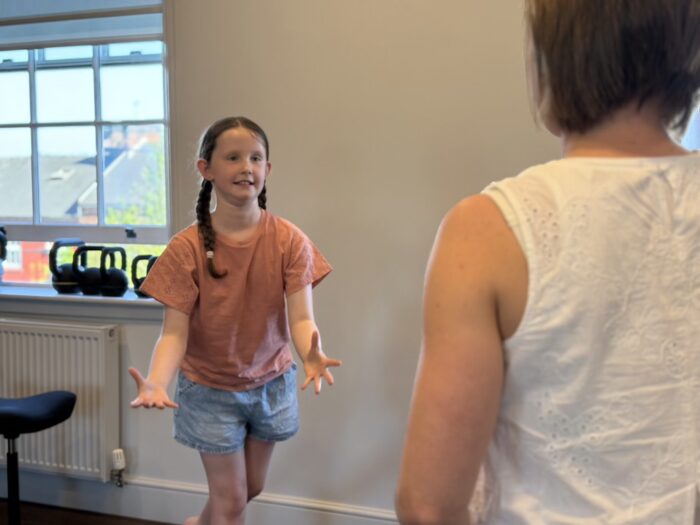
Importantly, treatment should be overseen by a physiotherapist with specialist training in paediatrics. Childhood musculoskeletal conditions require knowledge of growth patterns, developmental biomechanics and age-appropriate exercise prescription. A physiotherapist with specific paediatric expertise can tailor an individualised program that supports your child’s recovery and long-term physical development.
Help your child get back to what they love!
Patellofemoral pain doesn’t have to hold your child back from sport and play. Early assessment and personalised treatment guided by a paediatric-trained physiotherapist significantly increases the likelihood of a positive outcome.
If your child is experiencing knee pain that’s interfering with activity, we’re here to help. Contact our friendly reception team on 0114 2678181 to book an assessment with one of our paediatric physiotherapy specialists. You can read about other potential causes of knee pain in children by following this link.