The Maitland® Concept: A Modern Approach to Clinical Reasoning in MSK Practice

If you’ve ever felt that musculoskeletal physiotherapy is less about techniques and more about decision-making and clinical reasoning? If so, you’re already thinking along Maitland ® lines.
At its core, the Maitland® Concept is a structured, patient-centred approach to assessing and managing movement-related disorders. It blends detailed clinical examination with an evidence-informed treatment process—combining hands-on techniques (where appropriate), combined with targeted exercise and clear patient education.
But what really sets it apart is its emphasis on clinical reasoning. This is about forming hypotheses, testing them in real time, and constantly adapting based on how your patient responds. It’s not a protocol—it’s a thinking framework!
Built for Modern Clinical Practice
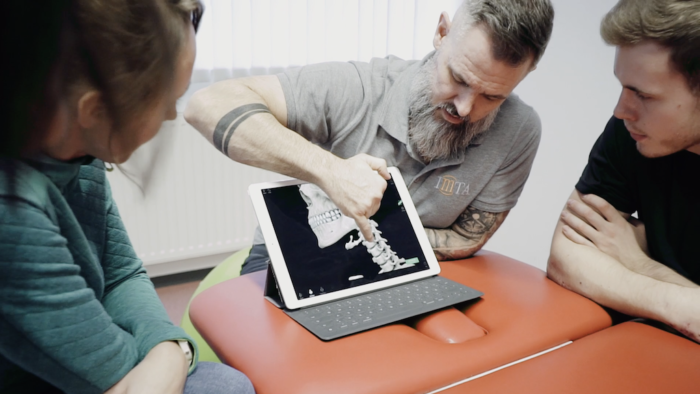
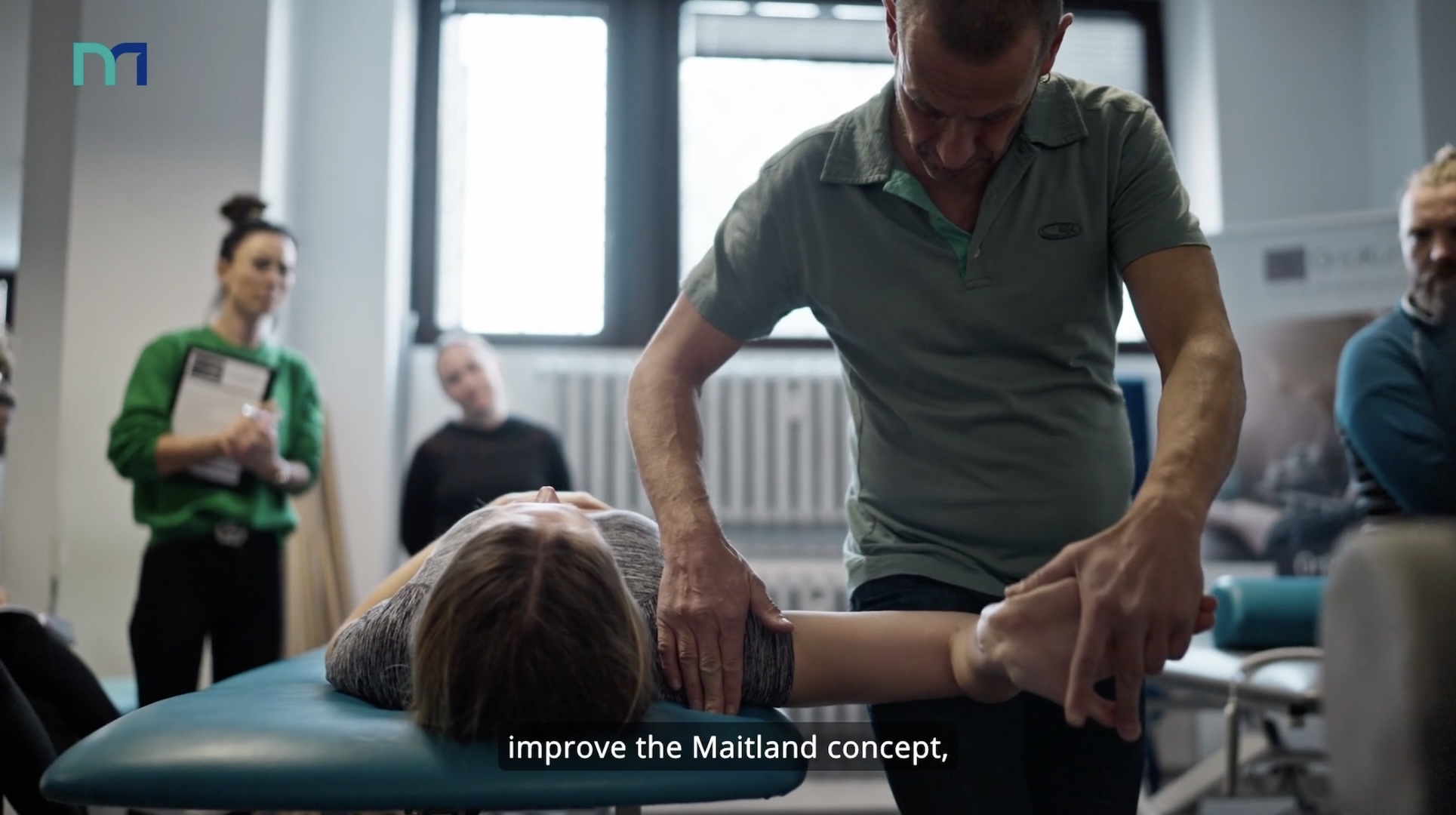
You would be forgiven for thinking that Maitland® is just a bunch of passive treatment techniques. After all, if you studied physiotherapy in the UK, ‘the Maitland Grades’ would have at least been mentioned during the musculoskeletal section of the undergraduate curriculum. This was never the way even Geoffrey Maitland taught his initial courses. For sure, his original treatment techniques (many of which I still use) were revolutionary but rather the Maitland® Concept was always about a clinical reasoning framework to equip clinicians to develop bespoke, patient-centred treatments (which includes exercise and patient education).
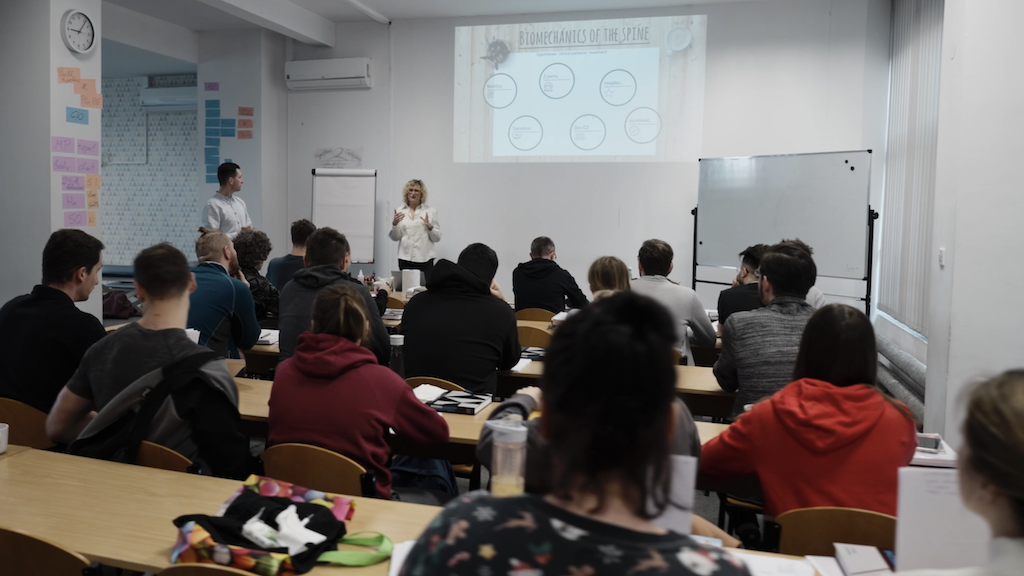
As evidence had developed and informed practice, so too has the concept. As technology has changed so too have the delivery of the courses. Rather than relying solely on classroom teaching, it combines structured online learning to prepare, revisit, and consolidate key concepts ready for in-person, face-to-face sessions for practical skills and discussion
The updated modular format also adds flexibility. Instead of fixed “weeks,” content is delivered in manageable teaching blocks – making it easier to fit around clinical schedules.
Clinical reasoning | Learning That Feels Like Real Practice
There is nothing worse that going on a CPD course or a conference where it is obvious that it doesn’t apply to your day-to-day clinical practice. The beauty of the Maitland® Concept is that is equips you with a clinically reasoning framework that you can use with every patient, every day. In each module, you will spend time developing:
– Clinical reasoning frameworks you can use immediately
– Hands-on assessment and treatment skills
– Real life patient demonstrations and supervised patient contact
– practical clinical discussions and reflective practice
– Confidence in applying research to everyday decisions
– Communication strategies that improve patient understanding and outcomes
For sure, we teach techniques based on clinical anatomy and movement dysfunction but the Maitland® Concept is less about memorising techniques and more about developing a clinical reasoning framework of when, why, and how to use them.
A Clear Pathway: From Foundations to Mastery
The programme is structured across three levels (10 modules in total), taking you from core principles through to advanced clinical decision-making.
Level 1 – Getting the Foundations Right
This is where it all starts. You’ll build a structured approach to assessment, learn to form and test hypotheses, and develop safe, effective treatment strategies. There’s a strong emphasis on:
– Patient-centred communication
– Clear clinical processes
– Recognising risk and knowing when to adapt or refer
Ideal for clinicians who want a solid, evidence-informed framework they can apply straight away.
Level 2 – Connecting the Dots
Level 2 moves beyond isolated techniques and into integrated care. You’ll learn to:
– Manage more complex or unclear presentations
– Link assessment findings with functional goals
– Integrate manual therapy, exercise, and education seamlessly
This level is all about sharpening your reasoning and improving how you connect information across the whole patient picture.
Level 3 – Managing Complexity with Confidence
This level is all about sharpening your reasoning and improving how you connect information across the whole patient picture. Here’s where things get interesting. Level 3 focuses on patients who don’t follow the textbook—persistent pain, recurring issues, or presentations with multiple contributing factors. You’ll refine your ability to:
– Make decisions under uncertainty
– Prioritise what really matters
– Justify your clinical choices clearly
It’s as much about thinking and communication as it is about treatment.
Go Deeper with Specialisation Workshops
Alongside the main pathway, there are optional workshops designed to deepen your expertise in specific areas. These are short, focused, and highly practical—covering topics like:
- Medical screening
- Headache and orofacial pain
- Neurodynamics
- Persistent pain
- Communication and behaviour change
More topics (like dizziness and load management) are continually being developed, keeping the programme aligned with modern practice.