What is shockwave therapy? | How does it work?
Shockwave therapy | What is it?
Shockwave therapy is an innovative treatment that is gaining popularity across the UK for its ability to accelerate healing and relieve pain — all without injections, medication, or surgery. It is also recommended by NICE (National Institute for Health & Care Excellence) as a gold standard treatment option in several common pathologies.
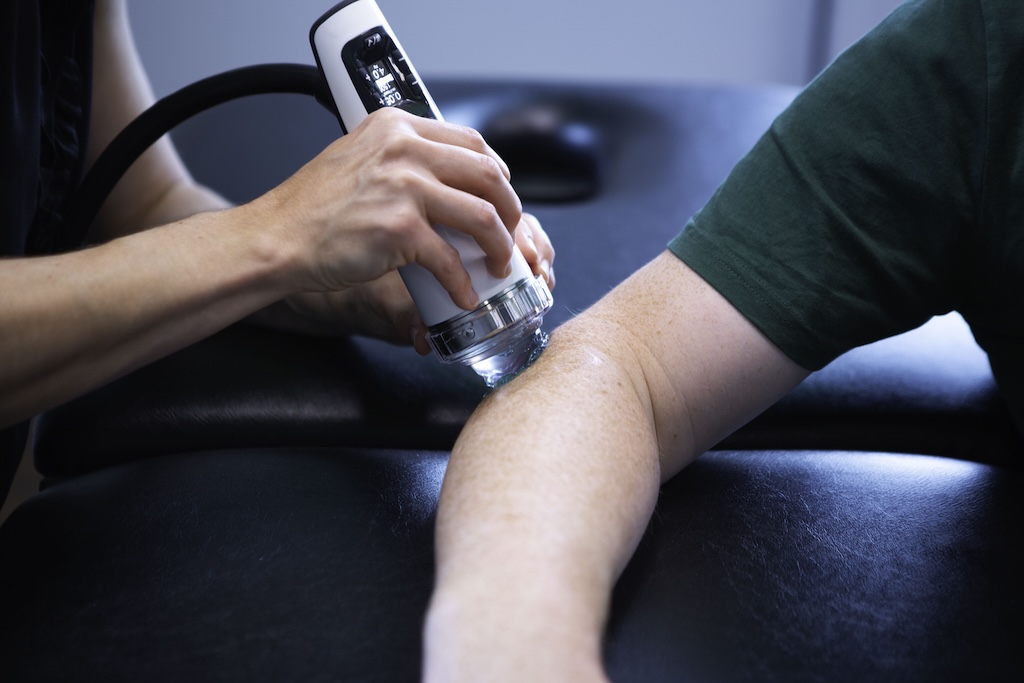
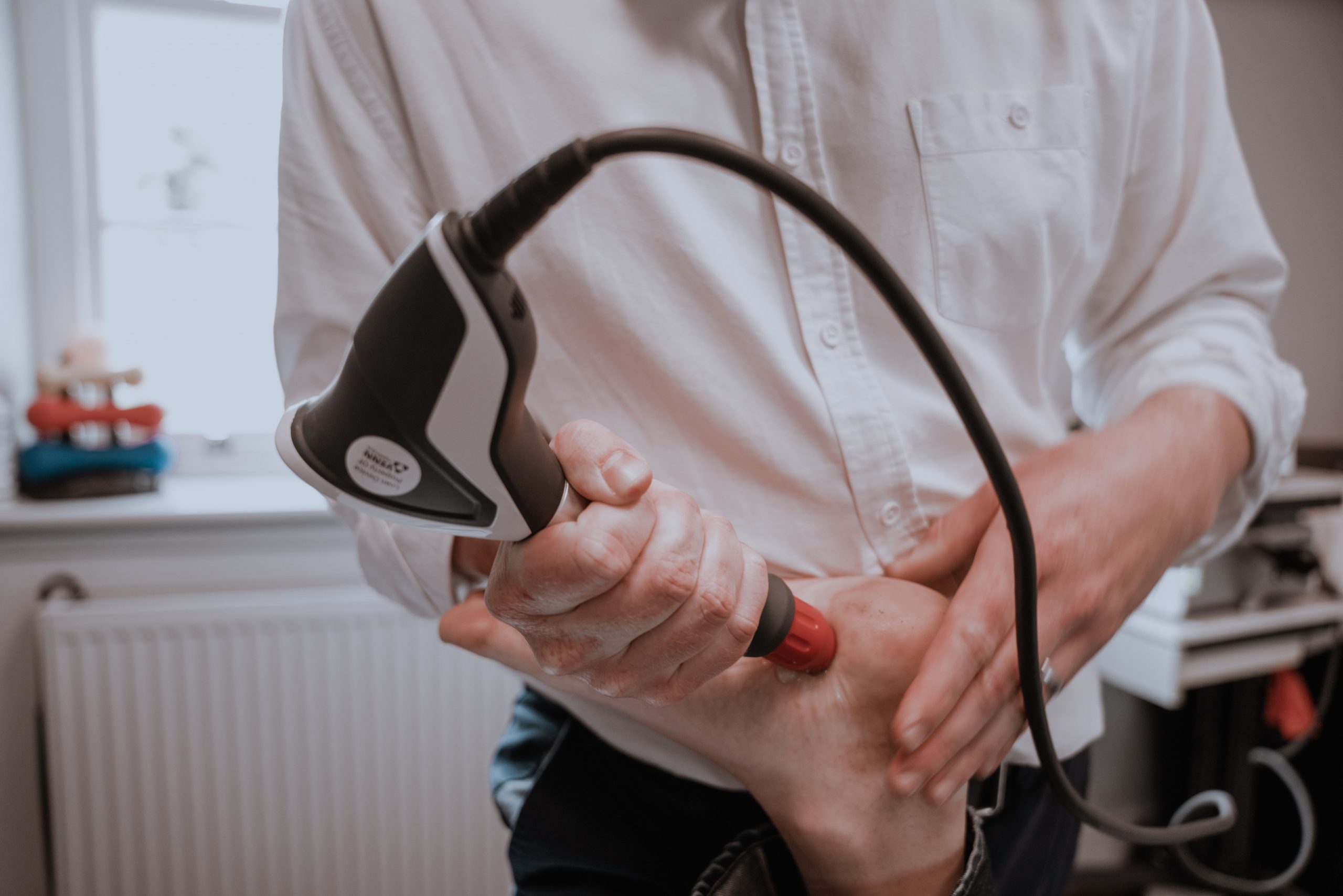
Originally developed through lithotripsy, it works by delivering acoustic energy (sound) waves into affected soft tissues. It’s particularly effective for stubborn conditions such as plantar fasciitis, tennis elbow, Achilles tendinopathy, and shoulder calcification. Issues that often resist traditional physiotherapy methods.

One of the best things about shockwave therapy is its speed and simplicity. Sessions typically last only 15–30 minutes. While some patients may experience mild discomfort during treatment, most report significant pain relief within just a few sessions. Because it’s non-invasive, downtime is minimal, allowing you to return to daily activities right away.
Whether you’re an athlete looking to get back to training or someone whose pain has impacted daily life, shockwave therapy offers a safe and scientifically backed solution to help you move freely again.
How does shockwave therapy work?
Shockwave therapy works by delivering acoustic energy waves into targeted tissues. These waves create tiny micro-stress effects that trigger the body’s natural repair mechanisms. Physiologically, shockwave therapy has been proven to have the following effects:
- angiogenesis, essentially increases blood circulation
- stimulates collagen production and restores collagen architecture
- promotes the regeneration of damaged cells
- break down calcified deposits
- reduce the concentration of pain-mediating substances such as substance P, decreasing local inflammation and sensitivity
- improve lubrication gliding between soft tissues by increasing lubricin production
Together, these effects lead to faster tissue repair and a reduction in chronic pain. By enhancing cell metabolism and encouraging new capillary growth, it restores tissue function in areas that have become slow to heal due to poor blood flow or repeated strain.
Radial vs Focussed Shockwave | What are the differences?
Focused and radial shockwave therapy are both forms of extracorporeal shockwave therapy. However, they differ in how the energy is delivered, how deep it reaches, and what they are best used for.
Radial shockwave
Energy is generated in the hand piece and disperses outward in a radial (spread-out) pattern, so the force is highest at the skin surface and gradually diminishes with depth.
- Lower maximum intensity, with effective penetration of roughly 3–4 cm. Best for superficial tissues and broader treatment areas.
- Used for larger, superficial problems such as mid-portion Achilles tendinopathy, plantar fascia, or superficial myofascial pain.
- Can feel more uncomfortable at the skin because the peak energy is superficial and spread over a wider area.
Focused shockwave
Energy is generated and then concentrated to a specific focal point within the body, allowing a precise, convergent wave to target a defined depth.
- Higher intensity with adjustable focal depth, typically from a few centimetres up to around 10–12 cm, allowing treatment of deeper structures such as proximal hamstring, hip, or bone-related problems.
- Deeper or more focal lesions, for example insertional tendinopathies, calcific deposits, stress fractures, and more irritable or acute presentations where precision and depth matter.
- Better tolerated despite higher total energy, as the main energy is delivered deeper rather than at the skin
Shockwave therapy & rehab

Shockwave therapy has been proven to provide significant improvements in pain and function…BUT…only when combined with a progressive strengthening programme. It can reduce pain and stimulate tissue healing, but its the exercise that helps support collagen remodelling and builds resilience in the pathological tissue, so patients can safely return to work, sport, and daily activities. Together, shockwave therapy and a structured exercise programme have been shown in clinical studies to improve pain scores, function, and durability of results more than either approach alone, making the combination a key part of effective rehabilitation.
For more information on the importance of a strengthening programme check out our blog on ‘strength vs stretch’ here.
To book an appointment online click here. Alternatively call 01142678181 or email [email protected]