Finding your threshold | The “Goldilocks Zone”

Finding your threshold | What do we mean?
Finding your threshold, in Physio terms, is the secret to unlocking a smooth, successful recovery from musculoskeletal pain. Essentially, the perfect pathway of Physio rehab. When you are suffering with an injury—be it a stubborn lower back strain, chronic Achilles tendinopathy, or an irritable shoulder—the temptation is often to either push through the pain or rest completely. However, the real magic happens in the middle, at your personal activity threshold.

Your threshold is the precise amount of exercise or daily activity that stimulates your muscles and joints without aggravating your condition. Think of it as the “Goldilocks Zone” of rehabilitation: too much activity causes pain flare-ups, while too little leads to weakness and stiffness. The bit in the middle is just right!
How to find your threshold
Finding this sweet spot requires tuning into your body’s signals. To help patients navigate this, there are 2 main ways in which Physiotherapy can help find your threshold:
Firstly, through comprehensive questioning in your initial assessment. What we call the subjective part. Essentially listening to your story. How things started. How they have progressed, or not. The type of pain you’re experiencing…etc etc. Having time to listen makes a world of difference. We can then establish a rough baseline of where you’re at.
Secondly, we utilise the clear framework of the 3 Rules of Pain applied to any physical, sporting or daily activity:

- Rule 1: Intensity > 3/10 – if you perceive the pain to be more than 3 out of 10 on your pain scale you will most likely be causing more damage/irritation. So STOP!
- Rule 2: Progression > if the pain increases as you carry out an activity, it is likely to be causing more damage/irritation. So STOP!
- Rule 3: Recovery > if it takes longer than 24 hours for the pain to recover from an activity, it’s likely you have done a bit too much. Therefore, next time, reduce what you did until you pass the 24 hour rule.
Sticking to these rules, and following the initial rehab protocol set by your Physio, enables us to establish a baseline. A fresh starting point.
Rehab progression | Getting stronger
Proof is in the pudding…or in this case, the porridge!
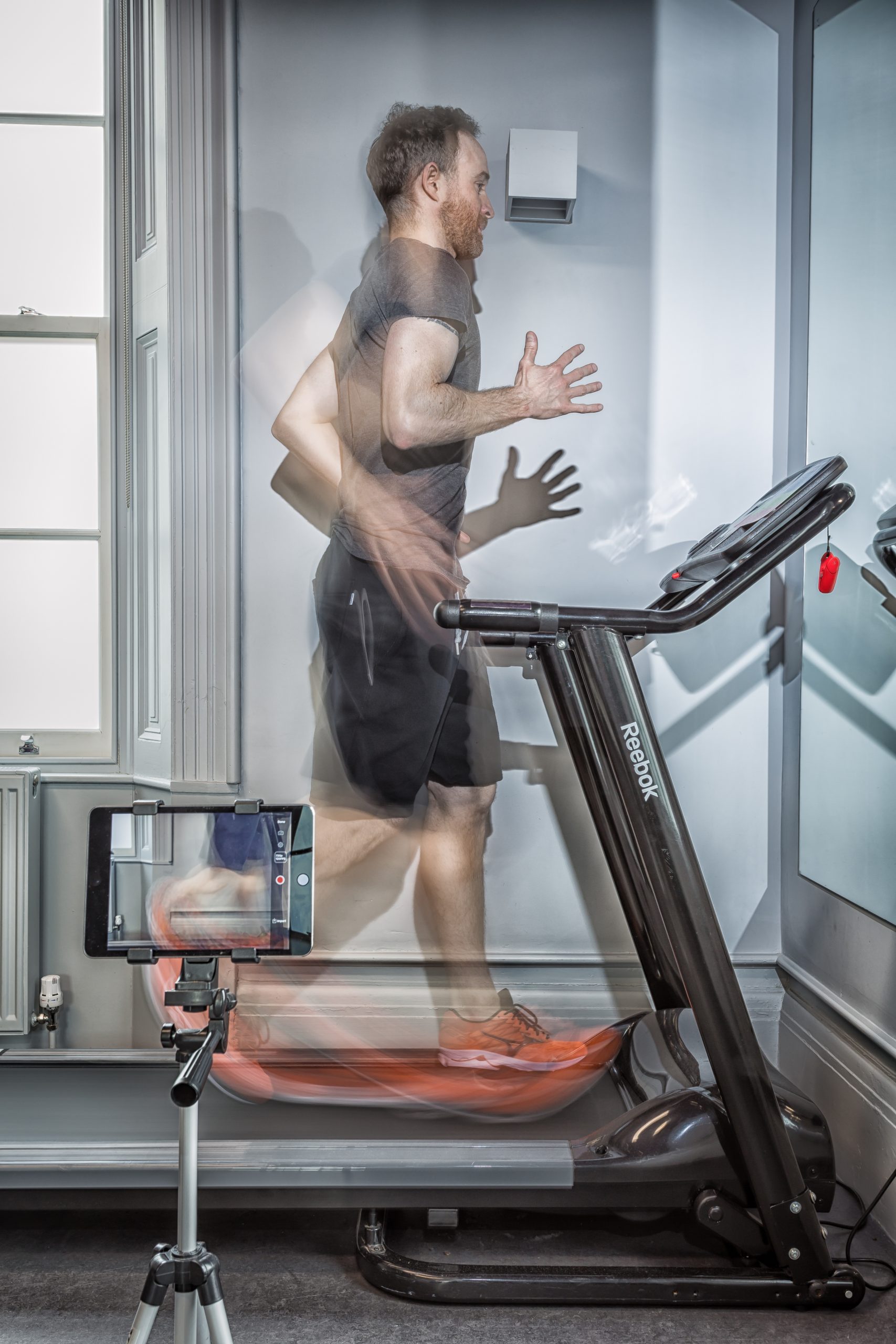
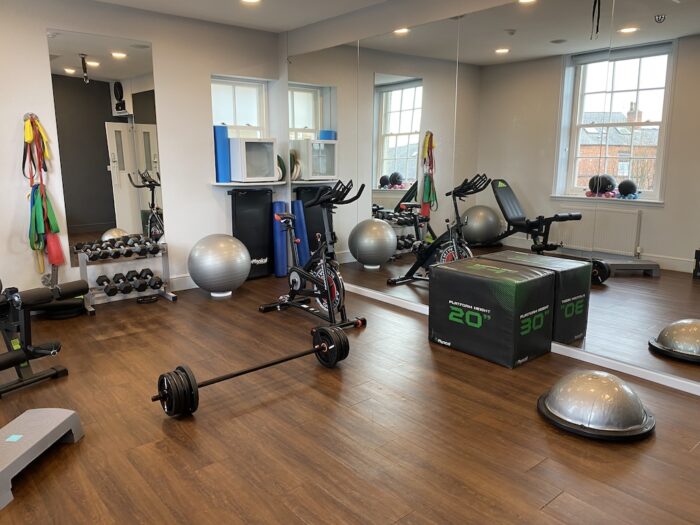
Once we identify your baseline threshold, we can introduce a structured, progressive loading programme. Muscles, tendons, and ligaments need a gradual increase in stress to rebuild their strength and resilience. By starting just below your threshold, we can systematically increase the weight, repetitions, or duration of your movements over time. This structured loading ensures your body adapts safely, moving your threshold higher and higher until you are back to full function.
Don’t just take our word for it. A threshold-focused approach is heavily reinforced by clinical literature:
In the management of tendinopathies, high-quality clinical trials demonstrate that structured, progressive tendon-loading programmes yield significantly better long-term clinical outcomes than passive modalities or standard stretching alone. Carefully managing this progression is vital to building long-term tissue tolerance and preventing tissue overload.
Similarly, for chronic lower back pain, a large-scale systematic review established that active exercise therapy is highly effective for reducing pain and managing functional limitations compared to standard usual care or complete rest. Research demonstrates that tailored physical activity safely reconditions the spine and helps reduce central pain sensitisation.
Are you struggling to find the balance between resting and moving? We can help you identify your exact threshold and design a tailored loading programme to get you back to doing what you love.
Book a comprehensive assessment with one of our expert physiotherapists or call our reception team on 0114 267 8181.